Securing the Future: Detecting Zero-Day Physical Threats with AI
Beyond Standard Object Detection
Most security AI systems today are fundamentally flawed when it comes to the real world. They are trained on massive datasets of specific objects: guns, knives, unauthorized vehicles. But what happens when a threat takes a form the model has never seen before?
A traditional CNN will simply fail to detect it, because it falls outside of its highly rigid training distribution. Retraining the model requires capturing thousands of images of the new threat, annotating them, and pushing an update to the edge, a process that takes weeks.
In security, weeks mean catastrophic failure.
The Power of Single-Example Threat Detection
At IFLAI, we approach security differently. We don't just train models to recognize specific objects; we train them to understand physical context and detect deep semantic anomalies.
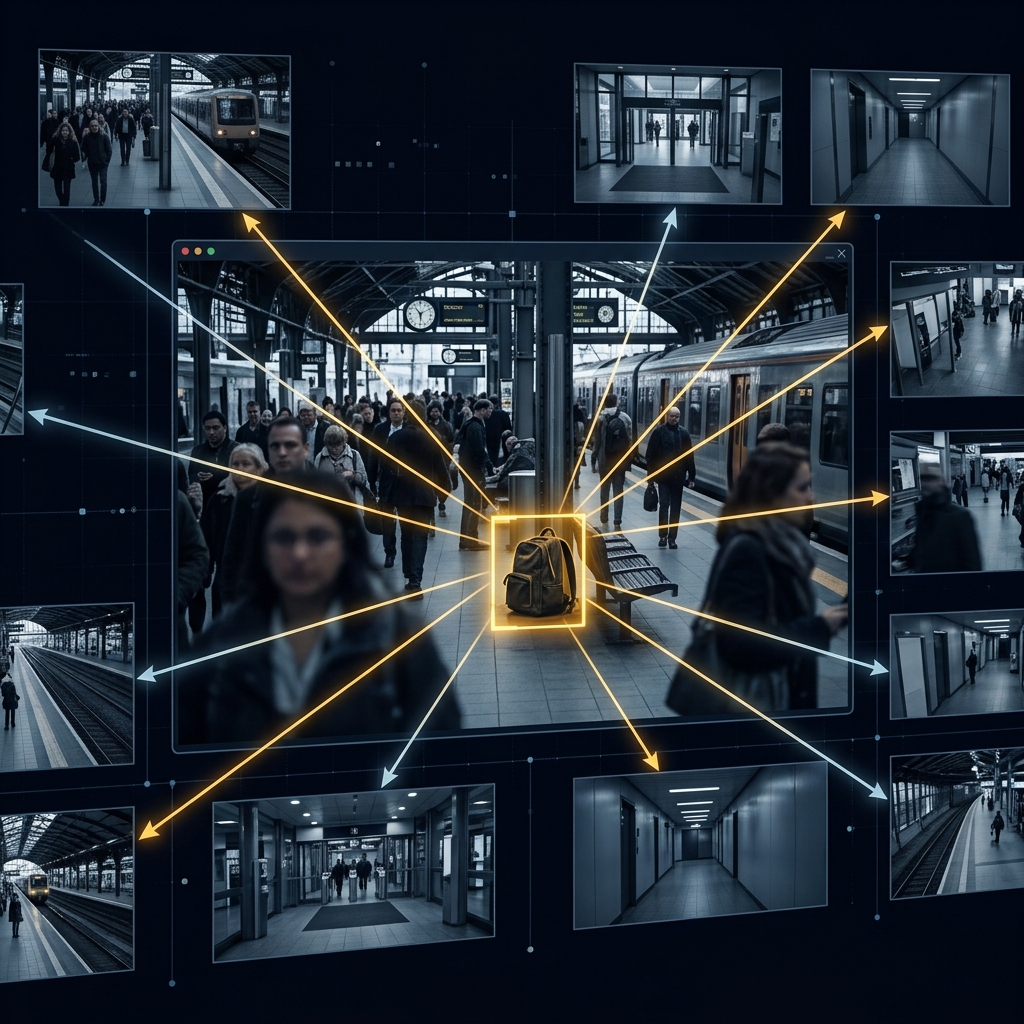
When a novel threat emerges, security operators can simply draw a bounding box around it on a single frame of CCTV footage. Our foundation model instantly absorbs this new semantic profile and can immediately begin tracking and detecting that exact threat across all connected camera feeds.
Massive Scale Object Retrieval
Imagine a suspect leaves a specific, unmarked backpack in a crowded terminal. A standard AI cannot be told to look for "that specific backpack."
With IFLAI's architecture, operators can select the backpack in one camera, and the system performs a massive-scale vector retrieval across thousands of hours of footage across the entire facility, instantly pinpointing exactly when and where that object entered the premises.
Edge Deployment
These aren't cloud-dependent toys. Our models are heavily optimized for ONNX, meaning they run flawlessly on local edge hardware directly within the security center, guaranteeing data privacy and sub-millisecond latency.
Great security AI shouldn't require you to predict the future to build your training dataset. It should adapt to the present, instantly.